

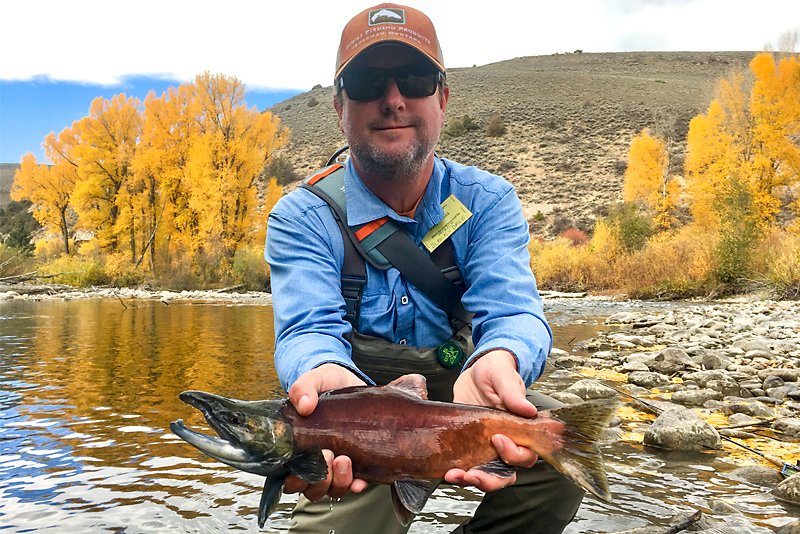

Nature’s Crimson Spectacle: The Seasonal Runs of Kokanee Salmon
Every autumn, a dramatic transformation unfolds in the cold-water lakes and rivers of western North America. The Kokanee salmon (Oncorhynchus nerka), a landlocked cousin of the ocean-going sockeye salmon, begins its final, spectacular journey. For most of their lives, these fish are elusive “silver bullets” dwelling in deep reservoir waters. However, as the seasons shift, an ancient biological clock triggers a massive migration. This event, known as the seasonal https://bigfishmccall.com/ Kokanee run, turns ordinary freshwater streams into rushing ribbons of brilliant crimson. It is a stunning natural phenomenon that attracts thousands of wildlife enthusiasts and anglers every year.
The Biological Metamorphosis
To understand the magic of the seasonal run, one must first look at the unique biology of the Kokanee. Unlike sockeye salmon, Kokanee never migrate to the ocean. Instead, they spend their entire two-to-four-year lifespan in deep, nutrient-rich freshwater lakes. They feed almost exclusively on microscopic zooplankton. During this lake-dwelling phase, they sport bright silver scales with dark blue backs. This provides a perfect camouflage against open-water predators.
However, as late summer approaches, their bodies undergo a radical metamorphosis. Hormonal changes shut down their digestive systems. They redirect all energy toward reproduction. Their silver scales dissolve, revealing a shocking, fiery red torso complemented by an olive-green head. Males develop an even more aggressive appearance. They grow a prominent humped back and a heavily hooked snout filled with sharp teeth, known as a kype.
The Autumn Migration
The peak of the Kokanee run typically occurs between late August and early November. The exact timing depends heavily on local water temperatures and latitude. Driven by an unerring homing instinct, schools of crimson salmon leave the lake depths. They crowd into the shallow gravel beds of connecting tributary streams.
The journey is exhausting and fraught with danger. Kokanee must navigate shallow riffles, bypass predators like bears and bald eagles, and battle strong upstream currents. Once they reach their ancestral spawning grounds, females use their tails to dig shallow nests, called redds, in the clean gravel.
After the eggs are laid and fertilized, the life cycle reaches its bittersweet end. Like all Pacific salmon, Kokanee are semelparous. This means they spawn only once and die shortly after. Their decaying bodies provide crucial nutrients to the stream ecosystem. They feed insects, birds, and mammals, which in turn sustains the next generation of salmon.
Top Locations for Angling and Viewing
Several key regions across the United States offer premier viewing and highly regulated fishing opportunities:
- Colorado: The Gunnison and East Rivers, fed by the massive Blue Mesa Reservoir, host one of the largest Kokanee runs in the nation. This area is famous for its regulated “snagging” season in the autumn.
- Utah: Strawberry Reservoir and Fish Lake are top destinations. Visitors flock to the Twin Creeks boardwalk at Fish Lake in October to watch the bright red fish swim right beneath their feet.
- The Pacific Northwest: Lake Chelan in Washington and various tributaries in Oregon boast healthy, self-sustaining populations that draw massive crowds of eco-tourists.
- California: Lake Tahoe and Taylor Creek feature an annual Fall Fish Festival, offering educational walkways designed specifically for safely viewing the spawning salmon.
Conclusion
The seasonal run of the Kokanee salmon is more than just a beautiful visual display. It is a vital ecological engine that drives the health of western freshwater systems. Whether you are an avid angler looking for a fall challenge or a nature lover seeking a breathtaking wildlife view, witnessing a Kokanee run is an unforgettable experience. It serves as a powerful, moving reminder of nature’s cyclical rhythms, resilience, and ultimate sacrifice.