

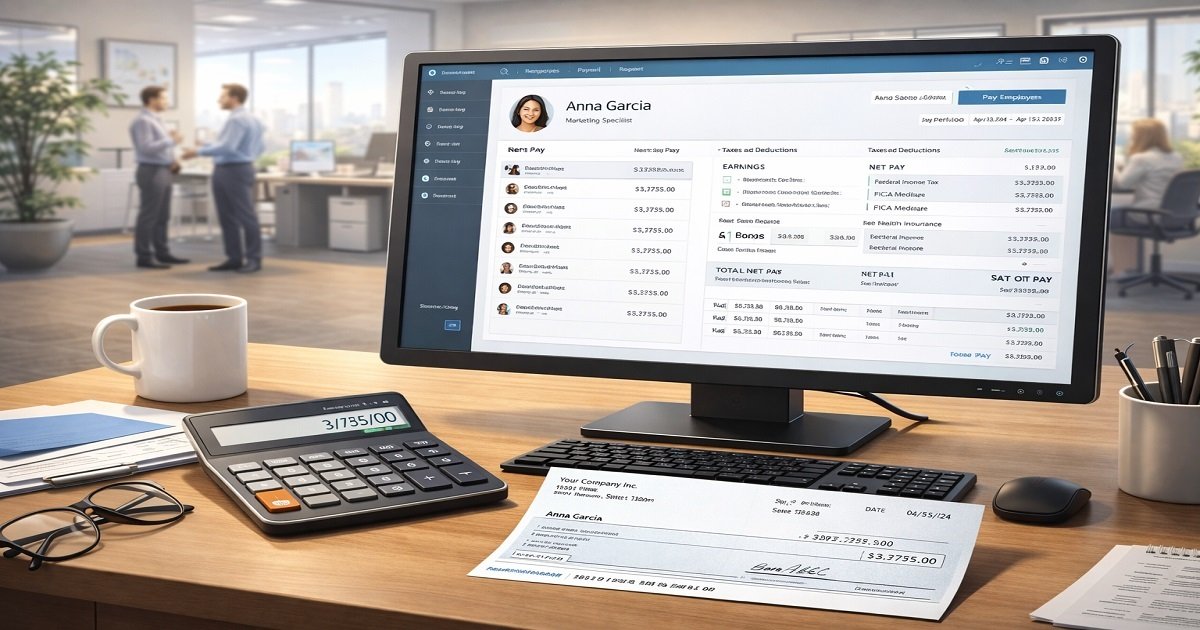

Managing employee compensation accurately and efficiently has become a top priority for businesses across Saudi Arabia. As organizations continue to expand and workforce structures become more complex, companies need advanced solutions to handle payroll operations with greater precision. In 2026, برنامج الرواتب is playing a crucial role in helping businesses streamline salary management, improve compliance, and reduce administrative burdens. Modern payroll systems are no longer simple calculation tools; they have evolved into comprehensive platforms that support strategic human resource management and financial accuracy.
The growing adoption of برنامج الرواتب reflects the increasing demand for automated payroll management solutions across Saudi Arabia. Businesses in industries ranging from retail and healthcare to manufacturing and professional services are implementing payroll software to manage salaries, overtime, benefits, deductions, and compliance requirements. These systems provide organizations with the efficiency needed to manage payroll processes accurately while supporting overall business growth.
The Evolution of Payroll Management
Payroll management has undergone significant changes over the past decade. Traditional payroll methods often involved manual calculations, spreadsheets, and extensive paperwork. These processes consumed valuable time and increased the risk of errors that could impact employee satisfaction and organizational performance.
Today, payroll software offers a more sophisticated approach. Modern systems automate calculations, generate reports, manage employee records, and integrate with other HR and accounting platforms. This transformation has enabled businesses to improve efficiency while maintaining higher levels of accuracy.
As digital transformation continues to accelerate across Saudi Arabia, payroll technology has become an essential component of modern workforce management strategies.
Why Efficient Salary Management Matters
Salary management directly influences employee trust, motivation, and organizational credibility. Employees expect accurate and timely compensation for their work. Delays or errors in payroll processing can negatively affect morale and create unnecessary challenges for HR departments.
Efficient payroll management ensures that salaries are processed correctly and on schedule. It also helps businesses maintain compliance with labor regulations while reducing administrative workloads. By automating repetitive tasks, organizations can focus more on employee engagement and business development.
In an increasingly competitive business environment, efficient salary management contributes significantly to organizational success.
Corporate Enterprises and Large Organizations
Large enterprises often manage thousands of employees across multiple departments and locations. Processing payroll manually in such environments is both time-consuming and prone to errors.
Payroll software enables large organizations to automate salary calculations, track attendance data, manage employee benefits, and generate detailed payroll reports. Centralized systems provide consistency across the organization while ensuring accurate payroll processing.
Enterprise businesses rely on payroll solutions to improve operational efficiency and maintain compliance with evolving labor requirements. As workforce sizes continue to grow, automated payroll management becomes even more valuable.
Small and Medium-Sized Businesses
Small and medium-sized enterprises face unique payroll challenges due to limited administrative resources. Business owners often need to balance payroll responsibilities with numerous other operational tasks.
Modern payroll software simplifies salary management by automating calculations and reducing paperwork. These solutions help smaller businesses maintain accuracy while minimizing the time required for payroll processing.
For growing companies, payroll software provides scalability and flexibility. As employee numbers increase, organizations can continue managing payroll efficiently without significantly expanding administrative workloads.
Retail and Hospitality Industries
The retail and hospitality sectors often employ large numbers of staff with varying schedules, overtime requirements, and compensation structures. Managing payroll in these industries can be particularly complex.
Payroll systems help organizations track working hours accurately and calculate wages based on attendance records, overtime hours, and shift differentials. Automated processes reduce the likelihood of payroll errors and improve transparency.
By simplifying salary management, payroll software allows managers to focus on customer service and operational performance rather than administrative tasks.
Manufacturing and Industrial Operations
Manufacturing companies frequently operate multiple shifts and employ workers under diverse compensation arrangements. Accurate payroll management is critical to maintaining productivity and workforce satisfaction.
Payroll software supports industrial organizations by automating wage calculations, overtime tracking, and attendance integration. Real-time data improves accuracy and reduces processing delays.
As manufacturing operations become increasingly technology-driven, payroll systems contribute to more efficient workforce management and operational excellence.
Healthcare Organizations and Medical Facilities
Healthcare institutions rely on highly skilled professionals working across different schedules and departments. Managing payroll manually in such environments can be challenging.
Payroll software helps healthcare organizations process salaries accurately while accounting for shift differentials, overtime, and specialized compensation structures. Automated systems improve efficiency and support workforce satisfaction.
By reducing administrative complexity, healthcare providers can dedicate more attention to patient care and service quality.
Educational Institutions and Universities
Schools, colleges, and universities employ a diverse workforce that includes teachers, administrators, researchers, and support staff. Managing payroll for these groups requires careful coordination and accuracy.
Payroll software provides educational institutions with tools to manage salary structures, attendance data, and compensation policies efficiently. Automated calculations reduce errors and improve financial transparency.
Educational organizations benefit from streamlined payroll processes that support effective resource management and operational efficiency.
Integration with Attendance and HR Systems
One of the most valuable features of modern payroll software is its ability to integrate with attendance management and HR platforms. This integration eliminates the need for duplicate data entry and improves overall accuracy.
Attendance information can be automatically transferred into payroll calculations, ensuring that salaries reflect actual working hours. Employee leave balances, overtime records, and benefits data can also be synchronized seamlessly.
Integrated systems create a more efficient workflow and provide organizations with a comprehensive view of workforce performance and compensation.
Enhancing Compliance and Regulatory Accuracy
Compliance is a major concern for businesses operating in any industry. Payroll software helps organizations meet labor law requirements by maintaining accurate records and automating compliance-related calculations.
Detailed reporting capabilities support audits and regulatory reviews while reducing the risk of penalties resulting from payroll inaccuracies. Automated updates ensure that payroll systems remain aligned with changing legal requirements.
As regulatory expectations continue to evolve, businesses increasingly rely on payroll software to support compliance efforts.
Improving Financial Planning and Budget Control
Payroll expenses often represent one of the largest operational costs for organizations. Accurate payroll management provides valuable insights that support financial planning and budget development.
Payroll software generates detailed reports that help organizations analyze labor costs, forecast future expenses, and identify opportunities for improvement. These insights support more informed decision-making and strategic planning.
Businesses can better allocate resources and maintain financial stability through enhanced payroll visibility and control.
The Role of Cloud Technology in Payroll Management
Cloud-based payroll solutions are transforming the way organizations manage employee compensation. These systems offer flexibility, accessibility, and scalability that traditional software cannot match.
Managers and HR professionals can access payroll information from virtually any location. Automatic updates and secure data storage improve system reliability while reducing maintenance requirements.
Cloud technology also supports remote and hybrid work environments, making payroll management more efficient and adaptable to modern business needs.
Future Trends Shaping Payroll Management in 2026
The payroll technology landscape continues to evolve rapidly. Artificial intelligence, automation, and advanced analytics are introducing new capabilities that improve payroll accuracy and efficiency.
Predictive analytics can help organizations forecast labor costs and identify payroll trends. AI-powered systems can automate routine tasks and enhance decision-making processes. Enhanced cybersecurity measures are also becoming increasingly important as businesses prioritize data protection.
These innovations are expected to further strengthen the role of payroll software in supporting efficient salary management throughout 2026 and beyond.
Payroll Software and Saudi Vision 2030
Saudi Vision 2030 emphasizes digital transformation, economic diversification, and operational efficiency across industries. Payroll technology aligns closely with these goals by supporting workforce modernization and organizational productivity.Businesses that implement advanced payroll systems can improve efficiency, reduce administrative costs, and enhance employee satisfaction. These benefits contribute to broader economic development and organizational competitiveness.As Saudi Arabia continues its digital transformation journey, payroll software will remain a key component of modern business operations.
By automating calculations, integrating with HR systems, improving financial visibility, and enhancing operational efficiency, payroll solutions provide significant value for modern businesses. In 2026, organizations that invest in advanced payroll technology will be better positioned to support employee satisfaction, maintain compliance, and achieve long-term success in Saudi Arabia’s evolving business landscape.
FAQs
1. What is برنامج الرواتب?
It is payroll software designed to automate salary calculations, payroll processing, and employee compensation management.
2. How does payroll software improve efficiency?
It automates payroll tasks, reduces manual work, and improves calculation accuracy.
3. Can payroll software integrate with attendance systems?
Yes, modern payroll solutions often integrate directly with attendance and HR management platforms.
4. Why is payroll compliance important?
Compliance helps businesses meet labor regulations and avoid penalties related to payroll errors.
5. Is payroll software suitable for small businesses?
Yes, payroll software helps businesses of all sizes manage salaries more efficiently and accurately.