

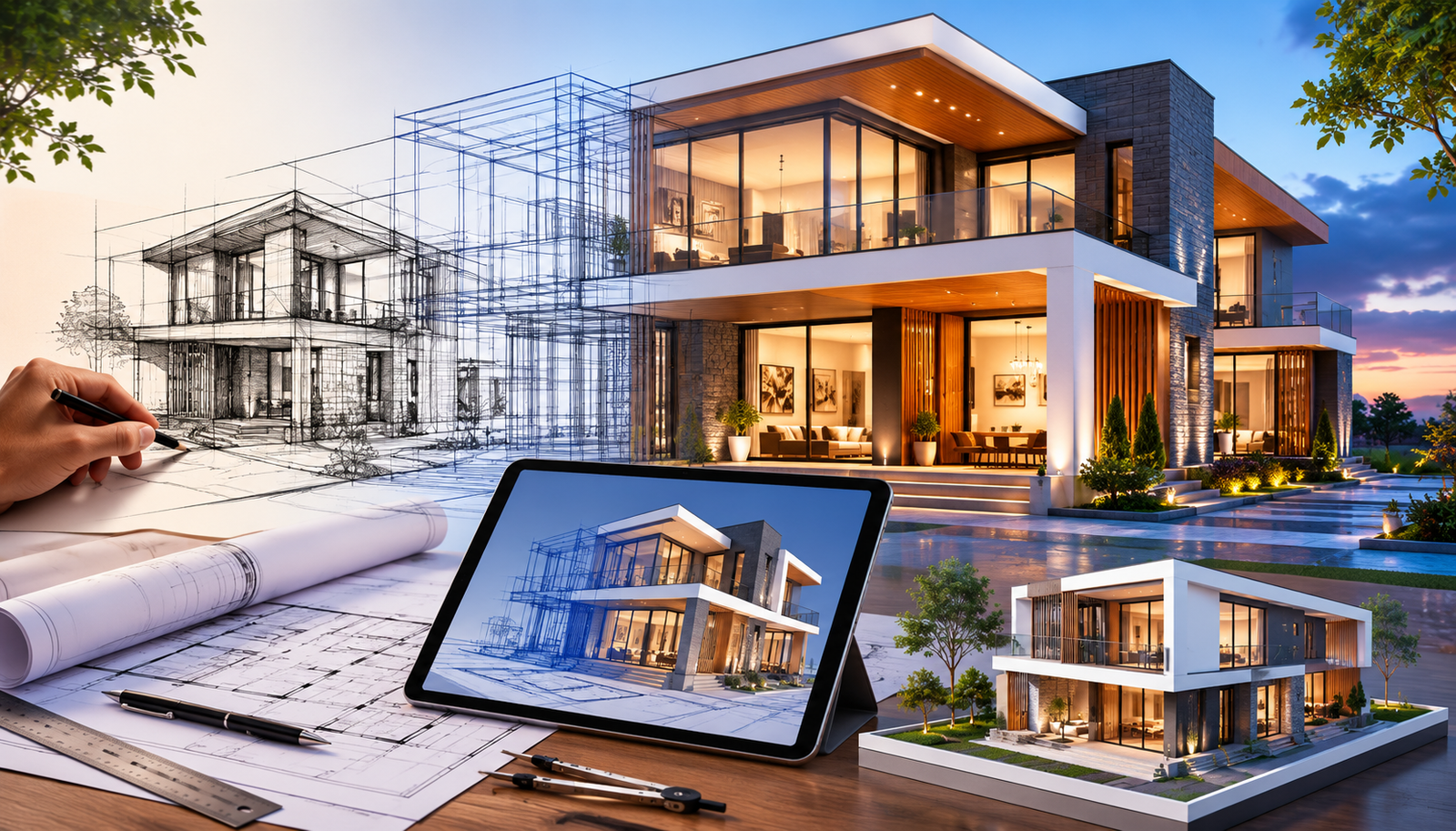

The introduction of 3D Rendering Services has drastically changed how architects create buildings. These services provide architects with a powerful way to visualize how their ideas will look when built; they use state-of-the-art CAD software programs that allow architects to create a three-dimensional (3D) image of their designs before getting approved by the client.
In the past, builders would provide flat, hand-drawn plans and small-scale mockups of what they wanted to build, which helped to create many famous structures but were often difficult for others to understand fully.
Here’s how 3D Architectural Visualization is changing the way the industry works, making fewer mistakes in the design of a project, and allowing architects to make a better presentation of a design before they even break ground on the site of a new building.
Bridging the Gap Between Blueprint and Brainstorm
Most people find old-school building plans tough to grasp without special training. Flat drawings packed with lines mean little to clients who just want to see the real room. Investors scratch their heads, trying to picture walls and light from those sketches.
Architectural Concept Visualization solves this by converting structural lines into photorealistic images. Now they spot sunlight glancing off tall glass panes by late afternoon. Realistic surfaces show how space feels inside without guesswork. Seeing becomes believing when materials mimic reality closely enough.
Accelerating the Architectural Design Process
Once things were built, altering the design meant big delays along with steep expenses. Changing plans later took much longer, plus drained resources fast. 3D rendering introduces unparalleled agility into the loop, thus accelerating the Architectural Design Process.
Real-Time Iterations
Clicking once might change the brick to stucco. Walls could move, opening up the kitchen. A new roof shape appears just as fast. Each choice unfolds without effort.
Streamlined Approvals
When clients clearly view each detail, reactions come faster. Since confusion fades, progress speeds up – from first idea straight to approval. What you see is what shapes the next step.
Proactive Problem Solving
Early detection of layout issues becomes possible when architects use renderings, fixing problems inside software instead of at the physical build location.
A Powerful Marketing and Fundraising Catalyst
A building idea won’t move forward on blueprints alone. Without money behind it, even the boldest design stays on paper. People must care, too – indifference kills momentum. Support shifts plans from sketches into reality. Whether it’s a luxury condominium, a commercial tech hub, or a civic center, Concept-to-Reality Visualization acts as a crucial sales asset.
Early on, clear pictures help builders show what homes could look like, pulling attention from people who might buy or rent. For neighborhoods taking shape, realistic renderings reveal how new structures fit into daily life – this tends to speed up approval from local authorities.
Conclusion
Ultimately, 3D Rendering Services does more than just present a pretty picture; it democratizes design. Inside tomorrow’s buildings today – vision grows sharper, more real. A shared picture forms when architects, clients, and builders see the same moment ahead. Not just lines on paper, but space you feel, walk through, even before foundations dig in. Reality blurs gently with what’s imagined, helped by tools that show depth, light, shadow as they’ll be. Progress pushes these images closer to life, frame by frame. What once took guesswork now takes presence – a room exists fully, long before walls rise.