


Introduction
Buying a vehicle directly from Japan has become an increasingly attractive option for UK motorists seeking exceptional value, reliable engineering, and a wider selection than the domestic market often provides. Thousands of vehicles are sold every week through professional auction houses across Japan, giving international buyers access to well-maintained cars with detailed inspection reports.
For anyone interested in jp used cars, understanding how the auction system works is essential. Purchasing directly can lead to significant savings, but it also requires careful planning, research, and a thorough understanding of import procedures. With the right approach, buyers can confidently source quality vehicles while avoiding unnecessary risks.
Understanding the Japanese Car Auction System
Japan operates one of the world’s most organized automotive auction networks. Licensed dealers submit vehicles for sale at dedicated auction venues where every car undergoes a structured inspection before bidding begins.
Unlike traditional dealerships, Japanese car auctions primarily serve registered automotive businesses rather than individual consumers. This means overseas buyers typically work through an experienced export company that has auction membership and can bid on their behalf.
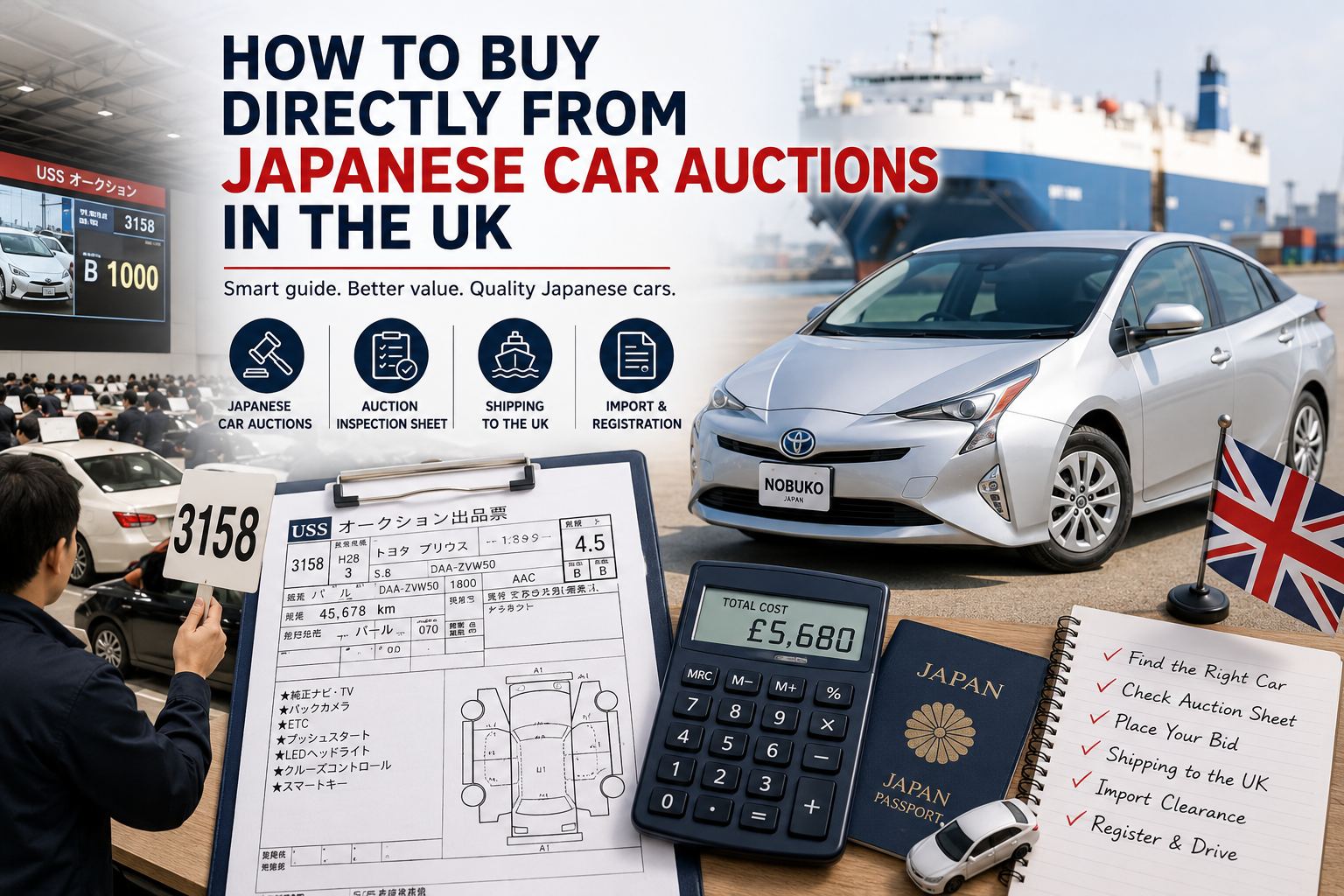
Each listing includes valuable information such as:
- Vehicle mileage
- Service history
- Exterior condition
- Interior grading
- Mechanical observations
- Previous repairs
- Auction grade
These reports provide buyers with a transparent overview before placing a bid.
Why UK Buyers Choose Japanese Auctions
Japanese vehicles have earned a strong reputation for quality, largely due to strict vehicle inspections and meticulous maintenance culture.
Some of the biggest advantages include:
- Lower purchase prices
- Wide selection of models
- Better overall vehicle condition
- Genuine mileage records
- High equipment specifications
- Limited corrosion compared to many UK vehicles
Many enthusiasts searching for jp used cars appreciate access to rare trims and limited-production models that were never officially sold in Britain.
Research Before Placing a Bid
Preparation remains the most important step in the buying journey.
Before entering Japanese car auctions, buyers should determine:
- Vehicle type
- Budget
- Engine size
- Fuel preference
- Transmission
- Estimated import costs
- Insurance expenses
- Registration fees
Understanding the complete financial picture prevents unexpected surprises once the vehicle arrives in the UK.
Learn How Auction Grades Work
Every auction house uses a grading system to indicate overall condition.
Although grading standards vary slightly, most follow similar principles:
Grade 5
Nearly new condition with minimal wear.
Grade 4.5
Excellent condition with only minor cosmetic imperfections.
Grade 4
Very good condition suitable for most buyers.
Grade 3.5
Average used condition with moderate wear.
Grade 3 and Below
Generally older vehicles requiring closer inspection or repairs.
Reviewing both the numerical grade and written inspection comments offers a much clearer understanding than relying on the grade alone.
Choosing a Reliable Export Partner
Since overseas buyers cannot normally participate directly, selecting a trustworthy export company becomes one of the most important decisions.
An experienced exporter can assist with:
- Vehicle inspections
- Translation of auction sheets
- Auction bidding
- Shipping arrangements
- Export documentation
- Payment guidance
- Customs paperwork
A professional partner also helps verify whether a particular vehicle matches its auction description before any commitment is made.
Understanding the Complete Cost
Many first-time buyers focus only on the winning auction bid while overlooking additional expenses.
Typical costs include:
- Auction purchase price
- Exporter’s commission
- Inland transportation within Japan
- Shipping charges
- Marine insurance
- Import duty
- VAT
- Port handling fees
- Vehicle registration
- MOT testing where applicable
Calculating every expense beforehand allows buyers to determine whether importing remains financially worthwhile.
Shipping from Japan to the UK
Once payment is completed, the exporter arranges transportation to the shipping port.
Most vehicles travel using one of two methods.
Roll-on Roll-off (RoRo)
The vehicle is driven directly onto a specialist cargo vessel.
Advantages include:
- Lower shipping cost
- Faster loading
- Ideal for standard vehicles
Container Shipping
The vehicle is secured inside a shipping container.
Benefits include:
- Greater protection
- Ability to ship spare parts
- Suitable for classic or high-value vehicles
The appropriate method depends on the vehicle’s value, destination, and buyer preferences.
Import Procedures in the UK
After arrival, several legal requirements must be completed before driving the vehicle.
These generally include:
- Customs clearance
- Payment of applicable taxes
- Vehicle compliance checks
- DVLA registration
- Number plate assignment
- Insurance
- MOT if required
Keeping all export documentation organised significantly simplifies the registration process.
Inspect Every Auction Sheet Carefully
Auction sheets remain one of the most valuable resources available during the buying process.
Experienced buyers pay close attention to:
- Repair history
- Paintwork markings
- Structural repairs
- Rust indicators
- Interior damage
- Mechanical comments
- Warning notes
Even highly graded jp used cars should always be reviewed carefully because every used vehicle has some level of wear.
Common Mistakes to Avoid
Many newcomers become excited by attractive prices and overlook essential details.
Some common mistakes include:
- Buying without reading the auction report
- Ignoring shipping costs
- Choosing an inexperienced exporter
- Underestimating taxes
- Failing to check UK compliance requirements
- Purchasing solely based on photographs
Taking a patient and informed approach often results in a much better ownership experience.
Why Japanese Vehicles Continue to Attract UK Buyers
The popularity of Japanese car auctions continues to grow because they provide remarkable variety and transparency. Buyers can compare thousands of vehicles every week, making it easier to find the exact specification they want.
Whether searching for economical hatchbacks, family SUVs, luxury sedans, commercial vans, or performance vehicles, the Japanese market consistently offers competitive pricing alongside impressive reliability. This combination explains why imported Japanese vehicles remain highly desirable across the UK.
Conclusion
Buying directly from Japanese auctions can be an excellent way to secure a high-quality vehicle at a competitive price, provided the process is approached with careful planning and realistic expectations. From understanding auction grades to calculating import costs and selecting a dependable export partner, every stage plays a vital role in achieving a successful purchase.
For buyers exploring jp used cars, taking time to learn how Japanese car auctions operate can significantly reduce risk while increasing the likelihood of finding outstanding value. A well-informed purchasing strategy ensures that importing from Japan becomes a rewarding investment rather than a complicated undertaking.
When researching trusted exporters and learning more about the Japanese vehicle market, Nobuko Japan offers valuable information and resources to help UK buyers better understand the auction process, vehicle sourcing, and international purchasing procedures.