

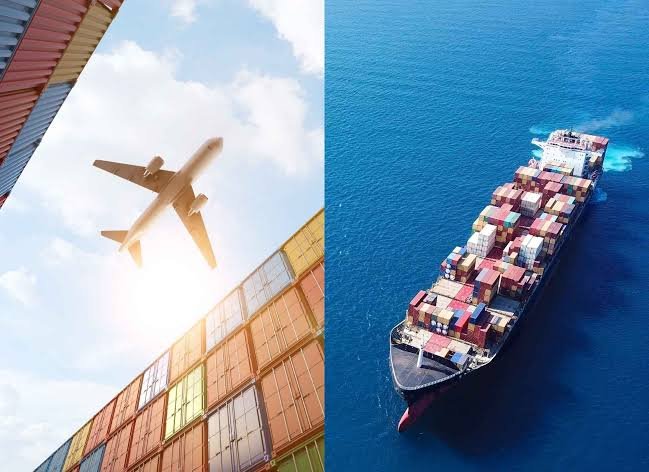

When it comes to logistics, many times in the international market, it’s not about the ship or the plane. There’s a constant battle between speed and cost that businesses must engage in. Sea freight is cheaper for bulk shipments, but air freight is much better for speed, which is often necessary in today’s supply chains. But selecting the wrong one may result in lost revenue, stock out or reduced profit margin. This guide explains exactly in which cases it’s worth paying extra for air freight vs waiting weeks for ocean transportation.
The fundamental trade-off between time and budget
It is important to understand the differences before going off on specific routes. Ocean freight is slow but quite cheap, suitable for non-perishable bulk goods. Air freight is quick and costly, ideal for time-sensitive or high-value items. The main thing to know for logistics efficiency is the “time elasticity” of your product, which is the amount of profit lost each day of delay.
In 2026, why is speed more important than ever? In 2026, why is speed more important than ever?
Why Speed Matters More Than Ever in 2026
The volatility of the supply chain has altered the equation. A product that has remained on a ship for 35 days is a non-turning-over capital. A two-week delay may mean you miss the selling season altogether if you are shipping consumer electronics or seasonal fashion items. In such instances, freight is justified by the revenue that is saved.
The Hidden Costs of “Cheap” Ocean Freight
A lot of shippers only consider the line item freight rate. Ocean freight does have port congestion, chassis splits, demurrage, and possibly inventory carrying charges, however. The total landed cost and the cost of waiting can add up to make a cheap ocean container very expensive.
Critical Scenarios Where Air Cargo Wins
Air cargo is not always the most suitable mode of transport, but it can’t be replaced in three scenarios. Now, let’s see when to pay the premium.
Perishable and Time-Sensitive Goods
Sea freight is not suitable if your product has a short shelf life, wilts in less than 30 days or becomes outdated. Medical devices, fresh flowers and pharmaceuticals require a controlled environment and quick transit. For instance, if mangoes or surgical instruments are sent out to sea, they will not last for 6 weeks. In this case, airfreight is not an option; it’s a necessity. Air cargo to Pakistan has become a popular choice for air shipping many high-value perishables to get goods to the local market fresh, particularly during the peak seasons such as Ramadan or Eid.
Preventing Stockouts and Production Stops
Ocean freight becomes an emergency parachute when a factory line comes to a halt due to a critical component that is stuck on a vessel off Singapore. When there is a danger of running out of stock (before the next ocean shipment comes in after 25 days) the revenue continues running by flying a pallet of components. This is the case for e-commerce stores that apply penalties to the marketplaces, such as Amazon, when items are out of stock.
High-Value, Low-Volume Cargo
For goods with a high value-to-weight ratio like microchips, gold-plated connectors, or top-of-the-range watches, the percentage of the product that is the weight of the air freight is very small. Would it be better to ship 500k dollars worth of iPhones by sea for $3k? Take theft, humidity and the cost of financing into account. They should be carried on a plane.
When Sea Freight Remains the King of Cost
Although ocean shipping is faster, many lanes are still ocean shipping for a reason. If your product is bulky and substantial and your customer doesn’t mind waiting, select the ship.
Why Ocean Freight Still Dominates for Bulk Commodities
The value per kg is low, and urgency is not high for furniture, building materials, industrial machinery, and auto parts. To pay for 10 tons worth of air rates of steel bolts would ruin a project, wouldn’t it? Also, the environment plays a significant role in favouring ocean freight (carbon footprint / ton-mile). When you have designated lanes, ocean freight can be predictable, assuming you make your booking 8-12 weeks ahead of time. As far as exporters are concerned, the traditional sea freight from Pakistan to USA is the main mode of trade in textile and leather goods, as buyers have been willing to accept the transit of 30–45 days for competitive prices in bulk orders.
The Right Time to Slow Down the Supply Chain
Deliberately choosing sea freight works when you have accurate demand forecasting. If you know you need Christmas inventory in August, you can book ocean space without panic. Similarly, if your product is not seasonal and your warehouse storage costs are low, the savings from sea freight go directly to your bottom line.
Making the Final Decision: A Simple 3-Step Formula
To choose between air and sea, do not guess. Use a cost-to-serve calculation.
Calculate the “Cost of Delay” Per Day
First, determine your daily profit on the goods being shipped. If one pallet of your product makes $500 per day in sales, and ocean freight takes 30 days longer than air, the delay cost is $15,000. Compare that to the airfreight premium. If the premium is only $4,000, you lose $11,000 by choosing sea freight.
Analyze the Incoterms and Payment Terms
Your shipments are CIF (Cost, Insurance, Freight) or FOB (Free on Board)? When your customer orders freight charges and then requests rapid shipping, they might hold the keys to air. When your customer orders freight charges and requires fast delivery, they could be the ones with the keys to air. Sea freight does, however, afford better cash flow management if you can manage the logistics and also have a letter of credit that releases payment upon bill of lading. Make sure you match the mode you choose to the terms you’re willing to pay.
Test Hybrid Solutions (Sea-Air)
For long hauls like air cargo to Pakistan from Europe or the US, consider a sea-air split. Ship the bulk by ocean to a hub like Dubai, then fly the final leg. This cuts total time by 40% compared to full ocean freight while keeping costs 50% below direct air. Similarly, for sea freight from Pakistan to the USA, some shippers truck to Karachi, ocean to Houston, then rail to Chicago. The point is: the binary choice of “all air or all sea” is outdated. Modern logistics uses multimodal optimization.
Conclusion:
There is no “one size fits all”. Use air cargo when time-to-market is the priority, which means saving revenue, avoiding shutdowns or saving perishables. Sea freight is the option to use where volume is large, value per kilo is low, and delivery lead times are not critical. Smart logistics managers don’t ask “Which is cheaper?”Smart logistics managers don’t ask “Which is cheaper?”. They question, “Which is more profitable, total landed cost, and risk considered? You can assess your specific thresholds for speed and cost and create a hybrid supply chain that achieves the best of both worlds – service levels and margins.
References
BAW. 2022. Effective Implication of AI for Digital Marketing. Online Available at <https://bestassignmentwriter.co.uk/blog/effective-implications-of-ai-for-digital-marketing/> [Accessed on 11 June 2026]
Xinmei, W., 2023. Improving Service Innovation through Big Data Analytics: A Case Study of an International Air Freight Forwarder (Doctoral dissertation, University of Canberra).