

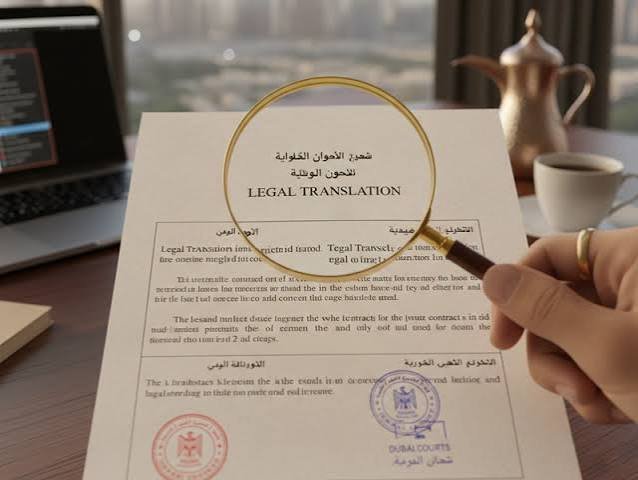

Quick answer: Translating legal documents into Arabic requires more than word-for-word conversion. You need certified translators familiar with legal terminology, regional Arabic dialects, and local compliance requirements—especially if the documents will be used in UAE courts or government agencies.
Getting a legal document translated into Arabic sounds simple. Hand it over, get it back in Arabic, done. But anyone who has worked with UAE authorities, courts, or government departments knows it rarely works that way. A poorly translated contract or visa document can cause serious delays, rejections, or even legal disputes.
This guide breaks down exactly how to translate legal documents into Arabic the right way—what to look for, what to avoid, and who to turn to for help.
Why Accurate Legal Translation Into Arabic Matters in the UAE?
Arabic is the official language of the UAE, and all legal documents submitted to government bodies, courts, or regulatory agencies must be in Arabic—or accompanied by a certified Arabic translation.
This applies to a wide range of documents, including:
- Business contracts and agreements
- Memorandums of association
- Power of attorney documents
- Court judgments and legal notices
- Marriage, birth, and death certificates
- Academic certificates and employment documents
A mistranslation in any of these can change the meaning of a clause, misrepresent a fact, or render the document legally invalid. The stakes are high, and accuracy is non-negotiable.
How the Best Business Consultants in Dubai Approach Legal Translation?
If you have worked with the best business consultants in Dubai, you have likely noticed that legal translation is treated as a specialized service—not a general one. That is because business setup, licensing, and regulatory compliance all depend on documents being translated correctly from the start.
Here is how professionals approach the process:
Use Certified Legal Translators Only
Not every bilingual speaker can translate a legal document. In the UAE, translations for official use must be carried out by a certified legal translator—someone who is licensed by the UAE Ministry of Justice.
Certified translators understand the legal terminology used in both the source language and Arabic. They know that a term like “indemnification” cannot simply be translated word-for-word; it needs to reflect its legal meaning within the UAE legal framework.
Match the Arabic Dialect to the Jurisdiction
Modern Standard Arabic (MSA) is used in formal legal documents across the Arab world. However, there are nuances depending on the jurisdiction. Documents intended for UAE courts will follow specific formatting and language conventions that differ from those used in Egypt or Saudi Arabia.
Always confirm that your translator is familiar with UAE legal standards, not just general Arabic.
Get the Translation Notarized When Required
Some documents—particularly those used in court proceedings or submitted to government departments—need to be notarized after translation. This involves having the translation stamped and verified by a notary public or a UAE-recognized authority.
Skipping this step is one of the most common mistakes people make, and it often results in documents being rejected.
Key Tips for Translating Legal Documents Into Arabic
1. Start With a Clean, Final Version of the Document
Never send a draft for translation. Any changes made after translation will require the entire document to be re-translated and re-certified. Always ensure the source document is finalized and approved before the process begins.
2. Provide Context to the Translator
Legal translators work better when they understand the purpose of the document. Is it for a court submission? A business license application? A property transaction? Context helps them choose the right terminology and tone.
3. Request a Glossary for Recurring Terms
For long contracts or ongoing business relationships, ask your translator to maintain a glossary of key terms. This ensures consistency across multiple documents and avoids confusion when the same term is translated differently each time.
4. Allow Enough Time
Rushed translations lead to errors. A certified legal translator working on a complex contract needs sufficient time to review the document carefully. Build translation time into your project timeline from the start.
5. Do Not Rely on Machine Translation
Tools like Google Translate have improved significantly, but they are not reliable for legal documents. Legal language is precise, contextual, and jurisdiction-specific. Machine translation cannot account for these nuances, and using it for official documents is a serious risk.
How Business Consultancy in Dubai Can Help Streamline the Process
Working with a business consultancy in Dubai gives you access to a network of trusted, certified legal translators who specialize in the types of documents most commonly needed for UAE business operations.
Consultancies handle the logistics on your behalf, including:
- Identifying the right translator for your document type
- Managing the certification and notarization process
- Coordinating with government departments when submissions are required
- Reviewing translated documents for completeness before submission
This is particularly valuable for entrepreneurs and foreign investors who are unfamiliar with UAE legal requirements and do not want to risk costly errors during the business setup process.
Frequently Asked Questions
What types of legal documents need to be translated into Arabic in the UAE?
Any document submitted to a UAE government body, court, or regulatory authority typically needs to be in Arabic or accompanied by a certified Arabic translation. This includes business contracts, powers of attorney, court filings, personal identification documents, and educational certificates.
How do I find a certified legal translator in the UAE?
Look for translators licensed by the UAE Ministry of Justice. Many reputable business consultancies and legal firms maintain a list of approved translators they work with regularly. Avoid using freelance platforms for legal documents unless you can verify the translator’s credentials independently.
How long does it take to translate a legal document into Arabic?
Timelines vary depending on document length and complexity. A straightforward one-page certificate may take one to two business days. A lengthy commercial contract could take a week or more. Always ask for a timeline estimate before confirming the service.
Is machine translation acceptable for legal documents in the UAE?
No. Machine translation is not accepted for official legal documents in the UAE. All certified translations must be completed by a human translator who holds the appropriate credentials.
What is the difference between certified translation and notarized translation?
A certified translation is completed and signed off by a qualified legal translator confirming its accuracy. A notarized translation takes this a step further by having the translation officially verified by a notary public. Some UAE government departments require both.
Final Words
Translating legal documents into Arabic is not a task to cut corners on. The accuracy of your translated documents directly affects how smoothly your legal, government, or business processes move forward in the UAE.
Take the time to work with a certified legal translator, provide clear context, and verify whether notarization is required. And if you are setting up a business or managing compliance matters, partnering with a professional consultancy can save you considerable time, money, and stress.
Do it right the first time, and your documents will work exactly as they should.