

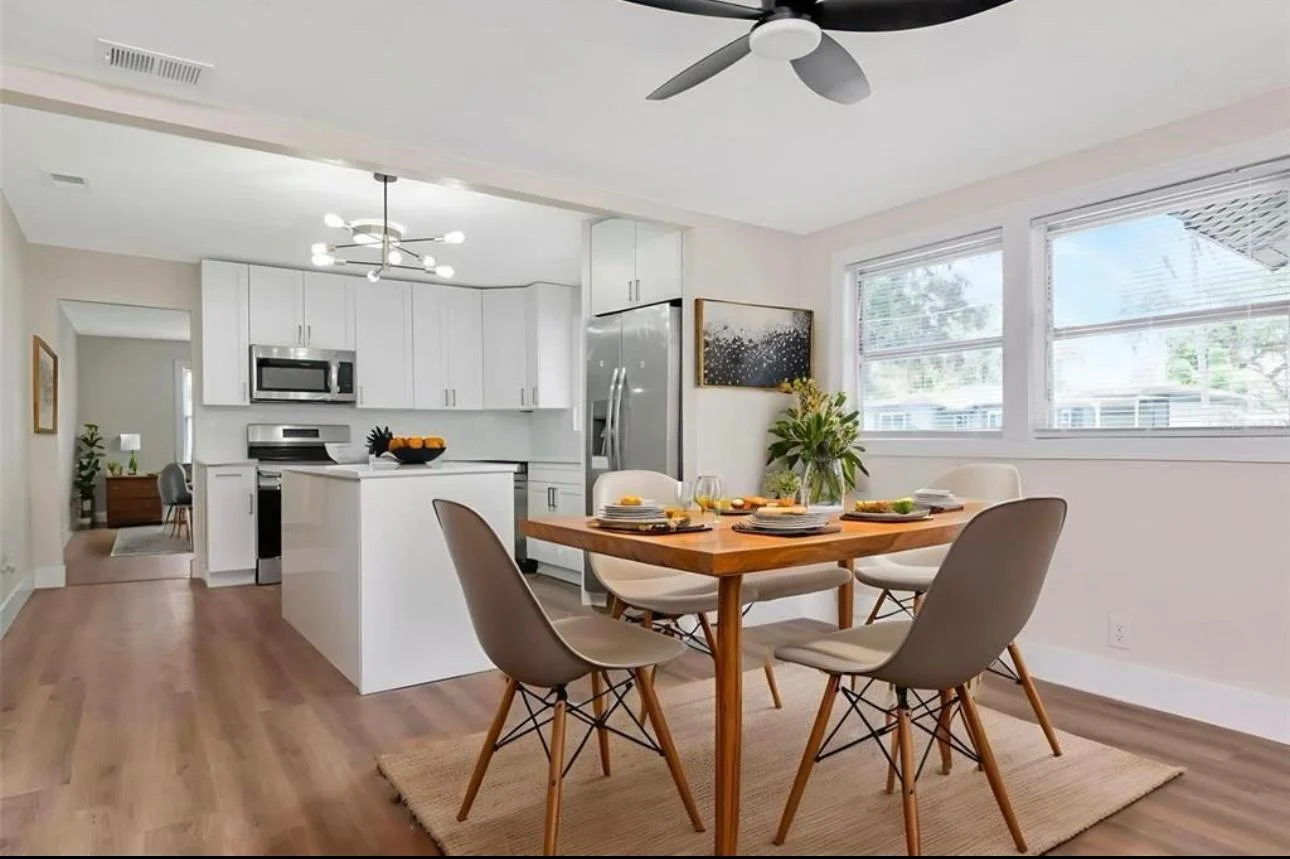

Start With How the Room Will Be Used
Before choosing finishes or furniture, think about how the dining room fits into your daily routine.
Some households use the room every evening, while others reserve it for holidays and special occasions. Understanding its purpose helps guide renovation decisions.
Ask yourself:
- Will the room be used daily?
- Do you host large family gatherings?
- Is the dining room connected to the kitchen?
- Should it serve multiple purposes?
- How much storage is needed?
Answering these questions early creates a renovation plan that supports both comfort and practicality.
Create a Layout That Encourages Conversation
A dining room should feel open and comfortable.
Furniture placement plays a major role in achieving this balance. Leave enough space around the table so chairs can be pulled out easily without interrupting traffic flow.
When planning the layout, consider:
- Comfortable walking paths
- Easy access from the kitchen
- Proper spacing between furniture
- Clear sightlines throughout the room
An insider tip many designers recommend is using painter’s tape to outline furniture dimensions on the floor before purchasing anything. This simple step helps visualize the space and avoid oversized pieces.
Choose a Table That Fits the Room
The dining table naturally becomes the centerpiece of the space.
Rather than selecting the largest table possible, choose one that suits both the room’s dimensions and your household’s needs.
Popular options include:
- Rectangular tables for larger rooms
- Round tables for smaller spaces
- Extendable tables for flexible seating
- Solid wood tables for timeless appeal
A well-proportioned table allows guests to move comfortably while maintaining an inviting atmosphere.
Upgrade Lighting for Comfort and Style
Lighting can completely transform a dining room.
Instead of relying on a single overhead fixture, combine different lighting layers to create a warm and adaptable environment.
Consider including:
Statement Pendant or Chandelier
Provides a visual focal point above the dining table.
Wall Sconces
Add soft ambient lighting around the room.
Accent Lighting
Highlights artwork, cabinetry, or architectural details.
Dimmers
Allow lighting levels to be adjusted for different occasions.
One practical observation is that lighting installed too high often loses its visual impact. Positioning fixtures at an appropriate height creates a more intimate dining experience.
Select Materials That Balance Beauty and Durability
Dining rooms experience regular use, making material selection an important part of the renovation.
Popular choices include:
- Hardwood flooring
- Luxury vinyl plank
- Durable wall finishes
- Natural stone accents
- Wood paneling
Materials should not only complement the home’s style but also withstand everyday wear with minimal maintenance.
Choosing timeless finishes often provides greater long-term satisfaction than following short-lived design trends.
Add Smart Storage Solutions
Storage is frequently overlooked during dining room renovations.
Well-designed storage helps keep the room organized while reducing clutter.
Ideas include:
- Built-in cabinets
- Sideboards
- Floating shelves
- Display cabinets
- Hidden storage benches
These additions provide convenient space for dinnerware, serving pieces, and seasonal decorations without overwhelming the room.
An insider tip many experienced renovators share is designing storage around items you already own rather than estimating future needs. This usually results in more practical organization.
Connect the Dining Room With Nearby Spaces
Many modern homes feature open layouts where the dining room flows directly into the kitchen or living room.
Creating visual consistency between these areas helps the home feel larger and more cohesive.
This can be achieved by using:
- Coordinated flooring
- Similar color palettes
- Matching hardware finishes
- Consistent lighting styles
- Complementary architectural details
Homeowners planning connected renovation projects often find useful planning ideas in this guide on kitchen remodeler Zephyrhills, which discusses how thoughtful design choices improve both appearance and functionality across adjoining spaces.
Incorporate Natural Elements
Natural materials help create a welcoming dining environment.
Consider introducing warmth through:
- Wooden furniture
- Indoor plants
- Woven textures
- Stone accessories
- Linen fabrics
These elements soften the space while maintaining a timeless appearance.
Even a few carefully selected natural features can make the dining room feel more relaxed and inviting.
Choose Comfortable Seating
Dining chairs should support long conversations as well as daily meals.
When selecting seating, consider:
- Proper seat height
- Comfortable back support
- Durable upholstery
- Easy maintenance
- Visual proportion
A practical lesson from many renovation projects is that homeowners rarely regret prioritizing comfort over decorative detail. Guests tend to remember how a dining room feels more than how it looks.
Add Personality Without Creating Clutter
Minimal decorative accents often have greater impact than overcrowded shelves or oversized accessories.
Simple ideas include:
- Framed artwork
- Decorative mirrors
- Fresh greenery
- Ceramic centerpieces
- Textured table runners
Choose pieces that reflect your personal style while maintaining visual balance.
Allowing open space between decorative elements helps the room feel calm and organized.
Flooring Choices Matter More Than You Think
Flooring connects the dining room to the rest of the home.
Popular renovation options include:
- Hardwood
- Engineered wood
- Luxury vinyl plank
- Large-format tile
Selecting flooring that works well with nearby rooms creates continuity while making maintenance easier.
Area rugs can also define the dining space, but they should extend beyond the table so chairs remain fully supported when pulled back.
Common Dining Room Renovation Mistakes
Even carefully planned renovations can fall short if certain details are overlooked.
Choosing Oversized Furniture
Furniture should suit the proportions of the room.
Ignoring Lighting Placement
Poorly positioned fixtures can affect both comfort and appearance.
Forgetting Storage
Functional storage keeps the room organized year-round.
Following Every Design Trend
Timeless choices generally remain appealing longer than trend-focused designs.
Neglecting Traffic Flow
Comfortable movement throughout the room should always remain a priority.
Design Around Everyday Living
The most successful dining room renovations focus on real-life use rather than picture-perfect inspiration.
Think about family dinners, weekend gatherings, homework sessions, or holiday celebrations. A flexible layout, durable materials, comfortable seating, and practical storage often provide more lasting value than elaborate decorative features.
When the design reflects the way people actually live, the dining room naturally becomes one of the most enjoyable spaces in the home.
Conclusion
A dining room renovation is an opportunity to create a space that brings people together while enhancing the overall character of the home. By focusing on thoughtful layouts, comfortable seating, layered lighting, durable materials, and smart storage, homeowners can design a room that is both beautiful and highly functional.
Also read for more information so click here.