

Before choosing a name, a bank, or even a business idea’s fine details, the first real decision anyone starting a business in Malaysia has to make is which legal structure fits. That single choice shapes your liability exposure, your tax treatment, and how much paperwork stands between you and actually trading. Malaysia offers a genuinely useful range of options, and picking the right one from the start avoids the common mistake of outgrowing your structure within the first year.
Sole Proprietorship: Fast, Cheap, and Genuinely Risky
If you’re a freelancer, consultant, or testing a small idea solo, a sole proprietorship is the simplest path registered as a business name through SSM, costing as little as RM30 for a year or RM60 for five, with the whole process often completed in under an hour. The catch is real: there’s no legal separation between you and the business, so any debt, lawsuit, or client dispute exposes your personal assets directly. It’s a reasonable starting point for genuinely low-risk work, but anyone handling client funds, How to Start a Business in Malaysia signing meaningful contracts, or facing real liability exposure should think carefully before defaulting to this option just because it’s fast.
LLP: A Middle Ground Worth Knowing About
For partnerships, particularly in professional services, the Limited Liability Partnership offers something in between — limited liability protection similar to a company, but taxed more like a partnership, with fewer ongoing regulatory obligations than a full Sdn Bhd. It’s popular among law firms, accounting practices, and consultancies with multiple partners. One detail worth factoring in for 2026: profit distributions to individual LLP partners exceeding RM100,000 a year are now subject to a 2% tax on the amount above that threshold, which is worth running the numbers on if your partnership expects strong early profitability.
Sdn Bhd: The Structure Built for Growth
For anyone planning to scale, raise investment, hire meaningfully, or attract foreign shareholders, the Sdn Bhd — Malaysia’s private limited company — is the structure that actually supports those ambitions. Foreigners can own up to 100% in most industries, and the entity offers real limited liability protection along with the credibility that comes with being incorporated rather than simply registered as a business name. It comes with more obligations too: a mandatory licensed company secretary within 30 days of incorporation, at least one Malaysia-resident director, and ongoing compliance costs that typically range from RM800 to RM3,500 annually depending on your transaction volume.
Registering, Step by Step
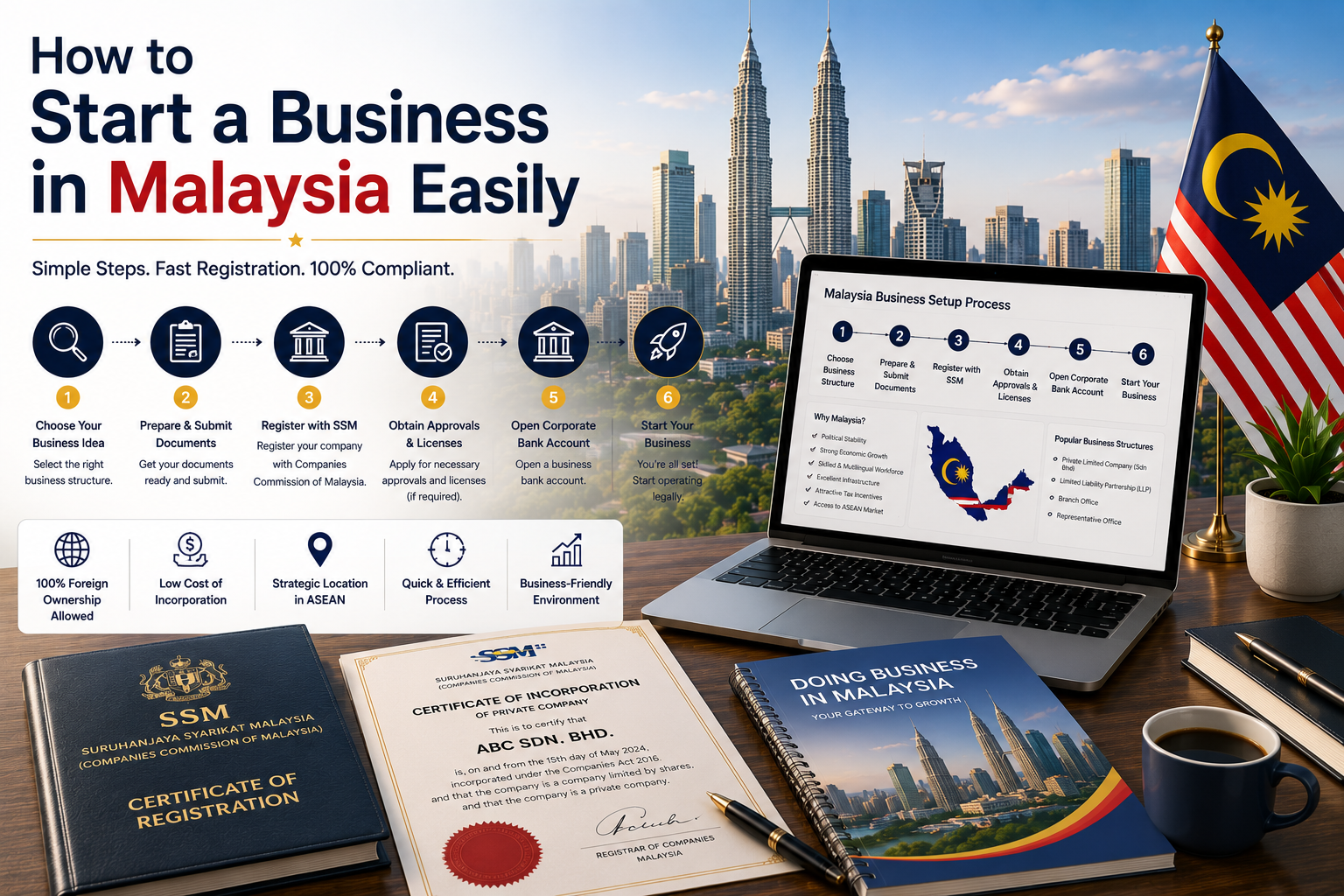
Whichever structure you choose, registration runs through SSM. For a sole proprietorship, it’s genuinely quick: complete an online form with your business name, address, and activity classification, pay the fee, and receive your Business Registration Certificate almost immediately. For a Sdn Bhd, the sequence takes a bit more preparation — reserve your company name through MyCoID (have backup options ready, since names resembling existing companies or containing restricted words are the most common cause of rejection), submit your incorporation details including directors, shareholders, and a clear MSIC-coded business activity description, and pay the RM1,000 statutory incorporation fee. Comply Globally everything in order, SSM typically issues your Notice of Registration within one to three working days.
The Mistakes That Actually Cost People Time
A few patterns show up again and again among founders who struggle through this process. Choosing a sole proprietorship for a business with meaningful liability exposure is one of the most common regrets, since converting to a Sdn Bhd later means starting the incorporation process over rather than simply upgrading. Mixing personal and business finances from day one creates accounting headaches that compound at tax time. And new employers frequently overlook that EPF and SOCSO registration — Malaysia’s retirement and social security contributions — need to happen before your first payroll run, not after.
Getting Genuinely Operational
Incorporation is a milestone, not the finish line. A Sdn Bhd still needs a corporate bank account, typically the longest single step in the process, along with tax registration with LHDN before it can properly invoice. As of 2026, new companies also need to think about e-invoicing readiness early: any transaction over RM10,000 requires an individual e-invoice regardless of your revenue size, and the broader mandate phases in based on turnover through 2027. Building this into your accounting software choice from the outset saves a genuinely painful retrofit later.
The Practical Takeaway
Starting a business in Malaysia is refreshingly achievable by regional standards, provided you choose the right structure for what you’re actually building rather than the fastest one available. A sole proprietorship gets you trading in under an hour; a properly prepared Sdn Bhd gets you a scalable, investor-ready company within a matter of days. The businesses that struggle usually aren’t fighting Malaysia’s system — they’re working around a structural decision made too quickly at the very start.