

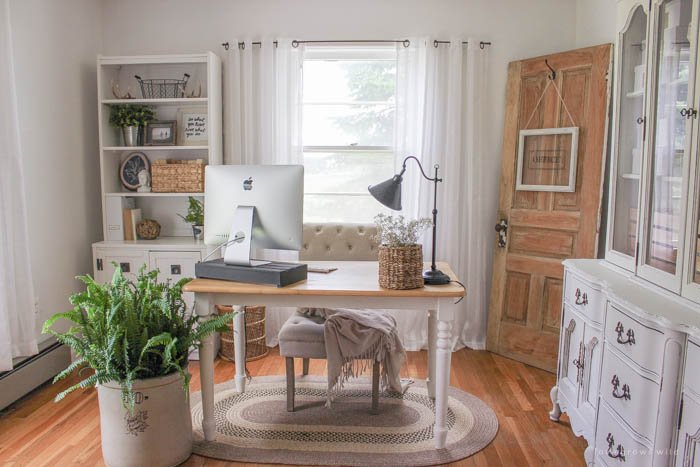

Remote work in the United States has changed how people think about home environments. Many couples, roommates, and business partners now share the same workspace every day. While this setup can be efficient, it often leads to frustration when space, lighting, and organization are not planned properly.
This is where home office styling becomes essential for shared environments. A well-designed workspace can reduce conflict, improve focus, and support different working styles in the same room. Without proper planning, shared offices often become cluttered, distracting, and mentally draining.
Studies from workplace design research in the U.S. show that employees working in poorly structured shared environments report lower productivity and higher stress levels. The issue is not just physical space, but how that space is organized and experienced. Designing a workspace for two requires more than placing two desks in one room. It requires understanding behavior, movement, and individual needs.
The Hidden Challenge: Why Shared Home Offices Often Fail (Agitate)
Most shared home offices fail because they ignore personal differences in working habits. One person may prefer silence and minimal setup, while the other thrives in a more active and visually stimulating environment. When these needs clash, productivity drops quickly.
Another common issue is lack of defined space. Without boundaries, one person’s work tools can spill into the other’s area. This creates frustration and disrupts concentration. In many U.S. homes, shared offices are created in small rooms where layout decisions are rushed rather than planned.
Lighting imbalance is another overlooked problem. One person may sit near a window with natural light, while the other works in shadows or under harsh artificial lighting. Over time, this creates discomfort and uneven work performance.
Even storage becomes a conflict point. Without structured systems, shared desks can quickly become overcrowded. This is where thoughtful home office styling plays a key role in maintaining balance.
Space Planning: The Foundation of a Functional Shared Office (Solution Part 1)
The first step in designing a shared workspace is clear space division. Each person needs a defined zone that supports focus and reduces interference. This does not always require walls; even visual separation can be effective.
In modern home office styling, designers often use dual desk layouts placed parallel or back-to-back to create structure. This allows each person to maintain independence while sharing the same environment.
In the United States, small apartment living has increased demand for efficient layouts. According to housing data, over 35% of urban remote workers now share home workspaces with another person. This makes smart spatial planning more important than ever. Proper spacing between workstations also improves comfort. Even a few extra inches between desks can reduce distraction and create psychological separation.
Personalization Balance: Two People, One Room
One of the most important aspects of shared workspace design is balance between individuality and unity. Each person should feel ownership of their area without disrupting the overall design.
Effective sculptural statement furniture encourages subtle personalization rather than full visual contrast. This can include different desk accessories, small storage units, or personal items that do not overwhelm the shared aesthetic.
Problems arise when one side of the room becomes too dominant visually. This creates imbalance and can lead to tension over time. A consistent design theme helps prevent this issue while still allowing individual expression.
In many U.S. shared home offices, designers recommend neutral base tones with controlled personal accents. This keeps the space visually calm while still reflecting personality differences.
Lighting Strategy: Solving Uneven Focus and Energy Levels
Lighting is one of the most critical elements in shared workspace design. Uneven lighting can create frustration and even physical discomfort. One person may feel energized while the other feels tired due to poor light placement.
In sculptural statement furniture layered lighting is essential for shared environments. This includes ambient lighting for overall brightness, task lighting for focused work, and adjustable desk lamps for individual control.
In the United States, interior studies show that proper lighting can improve productivity by up to 15 to 20 percent. This is especially important in shared setups where both users have different schedules and tasks.
Natural light should be shared fairly when possible. Positioning desks near windows in a balanced way helps reduce conflict and supports consistent energy levels throughout the day.
Storage Systems: Preventing Clutter Conflicts
Storage is often the main source of tension in shared workspaces. Without clear systems, items get mixed, misplaced, or duplicated. This leads to unnecessary stress and reduced efficiency.
Modern home office styling focuses on individual storage solutions within a shared environment. Each person should have dedicated drawers, shelves, or organizers to maintain independence.
Vertical storage is especially useful in small U.S. apartments where floor space is limited. Wall-mounted shelves and compact cabinets help keep surfaces clear and organized. Clear labeling systems can also reduce confusion. When each item has a defined place, the workspace remains functional even during busy periods.
Design Harmony: Creating a Unified Look Without Restriction
A shared workspace should feel cohesive even when used by two different people. This is where design harmony becomes important. Instead of matching everything, the goal is to maintain visual balance.
In home office styling, harmony is achieved through consistent materials, colors, and furniture proportions. This allows both users to feel comfortable without sacrificing individuality.
Some shared offices in U.S. co-working apartments use matching desk frames but allow variation in chairs or accessories. This creates structure without uniformity. Adding shared decorative elements, such as artwork or neutral rugs, helps tie the space together visually.
Real U.S. Case Studies: Shared Workspaces in Action
A New York-based freelance design couple redesigned their small apartment office by introducing dual desks and separate lighting systems. Before the redesign, they reported frequent distractions and workflow interruptions. After applying structured home office styling principles, both reported improved focus and reduced conflict during work hours.
In Austin, Texas, two remote software developers shared a home office in a compact space. By introducing vertical storage and parallel desk placement, they were able to increase usable workspace without expanding the room. Their productivity improved as each person gained clearer personal boundaries.
U.S. remote work surveys show that nearly 40% of couples working from home experience workspace-related tension. Most issues are linked to poor planning rather than lack of space. This highlights the importance of intentional design rather than improvised setups.
Psychological Comfort: Why Shared Design Affects Relationships
Shared workspaces are not just about productivity; they also affect relationships. Poor design can create subconscious stress, while balanced environments support cooperation and patience.
Effective home office styling reduces friction by giving each person control over their environment. Even small choices, such as lighting direction or desk organization, can influence mood and interaction. When both users feel equally considered in the design, communication improves naturally. This reduces workplace tension and supports long-term harmony in shared living situations.
Final Thoughts
Designing a shared workspace requires planning, flexibility, and awareness of human behavior. It is not just about fitting two desks into one room, but about creating a system that supports two different work styles.
When done correctly, home office styling transforms shared offices into productive, balanced environments. Each person gains clarity, comfort, and independence without disrupting the other.
Successful shared workspace design is about structure, fairness, and thoughtful organization. With the right approach, two people can work in the same space efficiently without conflict or distraction.