

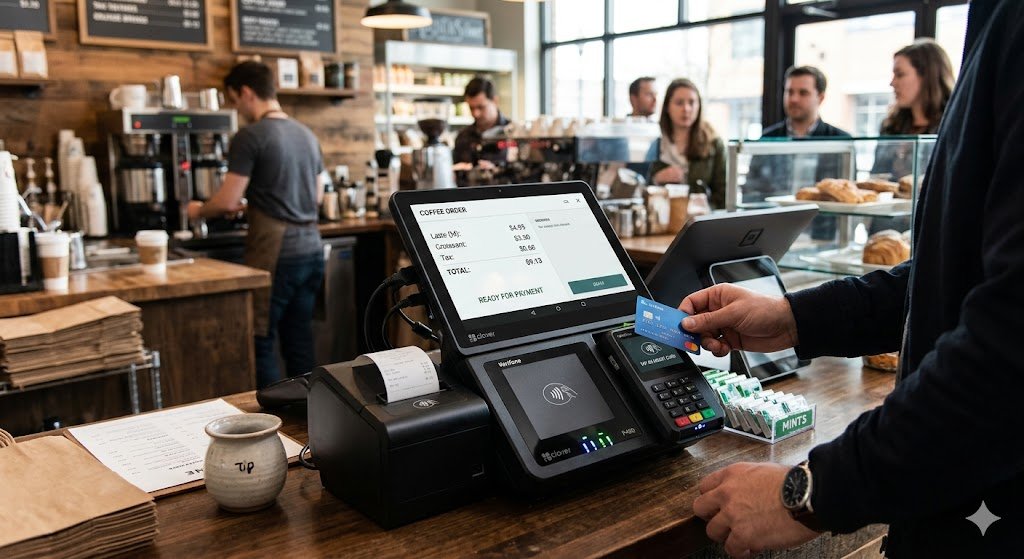

POS Machine Introduction
A POS machine is a crucial tool for businesses of all sizes. It simplifies transactions, improves efficiency, and helps business owners keep track of sales, inventory, and customer preferences. In today’s fast-paced market, relying on traditional methods of managing sales can put your business at a disadvantage. This is why upgrading to a POS machine is not just a choice but a necessity.
What is a POS Machine and How Does It Work?
A POS machine is a hardware and software system that allows businesses to process payments, manage inventory, and gather customer data. It’s more than just a register for processing payments. POS machines can handle various transactions, from credit card payments to mobile wallet systems like Apple Pay or Google Wallet. The system integrates with other business operations, including inventory and customer management, to offer a streamlined approach to running a business.
The way a POS machine works is quite simple. When a customer purchases an item, the product’s price is entered into the system. The machine processes the payment via cash, credit card, or digital wallet. It then generates a receipt and updates the store’s inventory in real-time, ensuring accurate stock levels and automatic sales tracking.
The Importance of a POS Machine for Businesses
Efficiency and Speed
POS machines drastically improve transaction speed. Gone are the days of manually calculating sales totals or keeping physical records of every transaction. The machine automatically handles calculations, significantly reducing the time spent on each sale. In turn, this boosts customer satisfaction and enables businesses to serve more customers in less time.
Printers Integration
In addition to the ease of payment processing, a POS machine integrates seamlessly with a receipt printer, enabling businesses to provide customers with printed receipts instantly. This integration ensures that businesses can maintain a smooth transaction flow without delays, offering both the customer and business owner a streamlined experience.
Inventory Management
A significant advantage of a POS machine is its ability to track inventory in real time. As sales are made, the system automatically updates stock levels, providing an accurate reflection of inventory at all times. This feature eliminates the need for manual stock checks and reduces the risk of overstocking or running out of popular items.
Detailed Sales Reports
POS machines provide detailed analytics and sales reports, allowing business owners to make informed decisions. These reports highlight the best-selling items, peak sales hours, and even customer buying patterns. With this data, businesses can adjust their marketing strategies, identify opportunities for growth, and enhance product offerings based on customer preferences.
Customer Relationship Management (CRM)
Many POS systems include CRM features that help businesses track customer details and purchase history. This information is invaluable for customer retention, as businesses can offer personalized discounts, loyalty programs, or tailored marketing campaigns. By understanding their customers’ preferences, businesses can foster long-term relationships and encourage repeat sales.
Reduced Human Error
Manual calculations and record-keeping are prone to errors, especially in a busy retail environment. A POS machine eliminates this issue by automating the entire process. With accurate transaction processing, businesses can minimize the risk of errors in sales records, inventory, and financial reporting.
Types of POS Machines
Mobile POS Systems
Mobile POS systems are compact devices that use smartphones or tablets to process payments. These systems are ideal for small businesses or those that require flexibility in customer service, such as food trucks or pop-up shops. Mobile POS systems allow transactions to be completed anywhere, giving business owners the ability to operate outside traditional brick-and-mortar locations.
Terminal-Based POS Systems
Terminal-based POS systems are stationary systems typically used in large businesses or retail stores. These systems are designed for heavy-duty transactions and can handle a wide range of payment methods. With advanced capabilities, these systems offer more comprehensive features such as inventory management, detailed reporting, and employee management.
Cloud-Based POS Systems
Cloud-based POS systems store data online, making it accessible from anywhere with an internet connection. This system is beneficial for business owners who operate multiple locations, as it allows centralized management. Cloud-based systems often include automated software updates, ensuring businesses always have access to the latest features without manual installations.
Selecting the Best Point-of-Sale System for Your Company
When selecting a POS machine, businesses should consider factors such as the size of their business, the type of products sold, and their budget. Smaller businesses might benefit from mobile POS systems due to their portability and lower initial costs, while larger businesses may require more advanced, terminal-based systems that offer comprehensive reporting and inventory management.
It’s also important to assess the features offered by different POS systems. Look for options that integrate with your existing software, provide detailed analytics, and offer reliable customer support.
Ending Note
In today’s competitive business environment, investing in a POS machine is one of the smartest decisions a business owner can make. Not only does it streamline payment processing, but it also offers valuable insights into sales, inventory, and customer behavior. Whether you’re running a small retail store or a large restaurant, upgrading to a POS system is key to staying ahead of the curve and ensuring long-term business success.Explore this part to learn even more.